
We come to your school.
The Skutečný kamarád programme teaches children to handle their emotions, set boundaries, recognise a safe relationship and know whom to confide in. It starts with a talk built around a true story; we have already given more than two hundred of them. Talks are held in Czech.
Home/For schools
Prevention that goes beyond warnings
Conventional prevention tells children what to be afraid of. We show them how to recognise that something is wrong, even when it comes from someone they love and trust. Abuse usually begins not with violence but by playing down an uncomfortable feeling.
The talk is built on a real story, not on statistics. The children listen to someone it happened to, and together we go through the moments when it would have been possible to react differently.
Books, lessons and methodology that speak the same language
In schools we build on the awareness raised by the Nikomu to neříkej (“Don’t Tell Anyone”) campaign. The goal is simple: the child recognises a risk earlier and knows whom to confide in, and the school knows how to follow up with help.
Handling emotions, psychological resilience, setting boundaries and safe relationships. The children’s books about emotions Když se naštve chameleon and Proč se bojí selátko (in Czech).
Talks, school programmes and workshops prepared together with the school prevention coordinator.
Seminars and methodologies for teachers, evening sessions and webinars for parents.
Three formats for different audiences
Talk for pupils
A true story and an open discussion. We adapt it to the age of the class and agree on it in advance with the school prevention coordinator.
Seminar for teachers
What to watch out for in the staffroom and in the classroom, how to respond when a child drops a hint, and when the legal duty to report applies.
Evening for parents
A practical session for parents: which signs we overlook, how to talk to a child and where to turn when things go wrong.
This is not a lecture learnt from books
The talk is led by someone whose knowledge of the subject does not come from books. That is exactly why children listen differently from the way they do in an ordinary prevention lesson.
 Speaker
Tomáš Paprštein
Founder of the association, author of the book Klubovna Naděje (“The Hope Clubhouse”) and creator of the #odvážný (“#brave”) show. As a child he was abused by an adult he trusted, and he has spoken about it publicly since 2022.
 Professional input
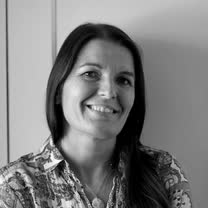
Mgr. Renata Ježková
A therapist. We consult professionals on the content of our talks so that the subject opens a way out for children rather than shutting them in with fear.
You can find the whole team and the association’s documents on the About us page.
What children take away from a talk
The aim of the talk is not for children to leave feeling afraid. Fear does not prevent anything; it only silences. The aim is for them to leave with a few concrete things they did not have before.
- Vocabulary. So they can name what they feel. “I don’t like this” is a sentence many children have never said out loud, because they did not know they were allowed to.
- Permission. So they know that an uncomfortable feeling is a valid reason to say no, even if it was caused by an adult they love.
- Certainty that it is not their fault. They usually take the blame on themselves. That is exactly why they stay silent for years.
- A specific place to turn. Not a vague “tell a grown-up”, but a name, a number and the option to write when talking is not possible.
- The experience that it can be survived. In front of them stands someone it happened to, who lives a normal life today. That has more impact than any statistic.
For teachers, the talk usually brings something more: a concrete picture of what manipulation looks like from the inside. Training on CAN syndrome (child abuse and neglect) covers the warning signs. Here, they also hear why the adults around a child overlooked them for years, without being indifferent.
From enquiry to talk in four steps
You get in touch
Send us an email or give us a call. A rough date, the children’s age and the number of classes are all we need.
We agree on the content
We discuss with the school prevention coordinator what issues your school is dealing with and adapt the programme accordingly.
We come to you
A talk usually lasts one or two lessons, including time for questions.
We stay available
We leave teachers our contact details and materials in case someone comes forward after the talk.
Book a talk
Fill in what you know about the talk. You do not need to have everything worked out; we will fine-tune the date and scope together. We usually reply within two working days.
Prefer email or phone? info@skutecnykamarad.org or +420 775 212 419.
What schools ask us most often
How much does a talk cost?
We agree the price individually, depending on the scope and distance. We try to accommodate schools that have no budget for it, and some talks are covered by donations. Get in touch and we will work something out.
What age is the talk suitable for?
We adapt the content to the children’s age. We always discuss the programme in advance with the school prevention coordinator.
What if a child discloses something during the talk?
We are prepared for that. We explain the procedure to teachers beforehand and remain available after the talk. We also give children and adults contacts for professional help.
Do you also travel outside Prague?
Yes, we travel all over the Czech Republic. For more distant places, we try to combine several talks into one trip so that travel does not eat up an unnecessary share of the budget. If you know of another school nearby that might be interested, let us know; it usually works out well for both schools.
How long does a talk last, and how many children can attend?
Usually one or two lessons, including time for questions. We agree the size of the group in advance. A smaller group means a more open discussion; with a larger one we move more towards a lecture format. Both make sense; it is just good to know in advance what you expect.
What do we need to prepare?
Nothing complicated. Beforehand, we go through the room, the equipment, the timetable and whether teachers will be present in the class. We recommend that they are. When a child knows that the teacher has heard the subject too, it is easier for them to come forward afterwards.
Isn’t it too much for children?
We adapt the content to the children’s age and do not use graphic details. The talk is not about what happened, but about how it started and where it was possible to react. In our experience, the subject tends to be harder for the adults who are afraid to raise it than for the children themselves.
Can we combine the talk with a programme for parents?
Yes, and we recommend it. A talk for pupils in the morning, a session for parents in the evening. Parents most often ask what to do about the subject at home, and that is a question the child cannot answer alone.
How can we get an idea in advance?
Watch an episode of the #odvážný show (in Czech). We run it in the same way as a talk: without sensationalism, focusing on the mechanism, not on details. The overview of all interviews is organised by topic.
I want a talk for my school
Send us a rough date, the children’s age and the number of classes. We usually reply within two working days.