
All #odvážný interviews
An overview of the 120 guests who have spoken on the show. For each one, you will find what the interview is about and where to watch or listen to it. All interviews are in Czech. We are gradually adding older episodes.
Home/What we do/#odvážný/All interviews
The #odvážný (“#brave”) show grew out of a simple conviction: when someone speaks about difficult things out loud, they stop being taboo. Behind every line below is a person who decided to share, in front of a camera, something that people usually keep quiet about. On sensitive topics, we add the expert perspective of psychologists and therapists, so that viewers are not left with the story alone but also receive an explanation and some direction.
The interviews touch on difficult subjects: sexual violence, domestic violence, self-harm and addiction. Take a break whenever you need one. Free and available around the clock in the Czech Republic: Linka bezpečí 116 111 (children and students), Linka první psychické pomoci 116 123 (adults). More contacts, including outside the Czech Republic.
What you will find in this overview
The interviews are divided into four groups. Click on the one that interests you.
Guest gallery with photos Subscribe on YouTube (opens in a new window)
Before the camera rolls
None of the interviews below came about by us ringing someone up and filming a week later. We follow the same process with every guest, and we stick to it even when that means postponing filming by months.
First contact and a call without a camera
Many guests get in touch themselves, usually after seeing one of the earlier episodes. Before we agree on anything else, we have a phone call. That call isn’t about preparing a script; it is about checking one thing: whether the person wants to speak because they want it to help someone, or because they are still looking for closure for themselves. In the second case, we postpone filming and recommend professional help. This has happened several times.
What we agree in advance
Before filming, we go through the topics with the guest and, above all, what we will not ask about. Every guest has the right to say at any point during filming that we should leave a part out, and they don’t have to give any reason. We never try to persuade anyone, and we don’t probe for details the guest doesn’t offer.
After filming and before publication
The guest sees the edited episode before anyone else. They can ask for any passage to be removed and can withdraw consent to publication entirely, even once the episode is finished. This right remains after publication too: when a guest asks, even a long time later, for an episode to be taken down, we take it down without discussion.
Expert oversight
On the harder topics, we discuss the shape of the interview with the psychologists and therapists we work with. Some of them are also guests in the expert episodes, which you will find in the overview below. It isn’t a formality: they are the ones who have repeatedly shown us where the line lies between testimony and a how-to guide.
What you deliberately won’t find in the interviews
The difference between prevention and sensationalism lies in the details that are said out loud. That is why we follow a rule of not publishing:
- Descriptions of individual acts. We talk about what it did to the person, not about exactly what happened.
- The names of perpetrators, or any details that could be used to trace a particular family, school or town.
- Anything that could identify a child who is still a minor.
- Specific methods of self-harm or weight loss. On these topics, we follow the guidelines for safe media reporting.
- Judgements about what the guest should have done differently. Responsibility lies with the person who caused the harm.
How to use the archive
The overview below isn’t meant to be read from beginning to end. Depending on why you are here, different parts will be useful.
If you are a parent or grandparent
Start with the expert interviews, not the personal stories. The experts name specific warning signs and situations that can be picked up at home. You will then see the personal stories differently: they are not about exceptional cases, but about ordinary families where for a long time nobody noticed anything.
If you are a teacher or school prevention coordinator
Individual episodes can be used as material for a staff meeting. A specific testimony opens up a discussion in a different way from general training. If you want to work directly with children, we don’t recommend playing episodes in class without preparation; that is what a school talk is for, where there is someone with the children who knows how to respond if someone discloses something.
If you have been through something similar
Look for a story that resembles yours. One sentence keeps coming up in the feedback we receive: “For the first time, I heard someone describe exactly what I thought had only happened to me.” If it unsettles you, you will find contacts for help on the Get help page.
If you are a journalist or student
The interviews are freely available and may be quoted. We ask for just two things: cite the source, and don’t take statements about abuse out of context. For comment and background material, write to us via our contact page.
Personal stories 63

Iva Melichová
Living with Crohn’s disease
She was diagnosed at thirteen, spent six years in and out of hospital and, after a year confined to bed, had to learn to walk again. Today she is free of symptoms and helps other patients.

Aneta
Survivor, now clean
She grew up with a heroin-addicted mother in dealers’ flats and was abused as early as nursery. After forty years of silence, she is speaking publicly about her childhood for the first time.

Vanes
A second mum to her five younger siblings
She describes violence and abuse within her family and the path to getting help. On the show, she reads aloud, for the first time in public, a letter to her inner critic.

Adam Vopička
Musician and director
Half of his face became paralysed and he lost half of his hearing. He links this himself to years of being unable to say no.

Nella
Two months after her first episode, she comes back to the comments: to the fifty people who spoke up for the first time, and to those who blamed her.

Johannka
Her own father abused her from the age of five. She spoke up when her mum decided to leave. Together they talk about what came next.

Martina
Multiple sclerosis at 17
She was thirteen when she first collapsed. She was only diagnosed with multiple sclerosis at seventeen, and the first thing she googled told her she would end up in a wheelchair. Now twenty-one, she takes medication every day and speaks openly about life with MS so that no one else has to go through it alone.

Marek
My uncle abused me, then I was the one locked up
He was seven when his own uncle began abusing him. He kept silent for twenty years, and in the meantime went through seventeen years of drugs, life on the streets and eight years in prison. He has now been clean for ten years and is writing a book.

Tereza „Thea“ Podzimková
OCD that took over her whole life
At seventeen she was washing several times a day, changing her bedding and carrying her phone in a plastic bag for fear of infecting someone. She ended up on the children’s psychiatric ward at Motol hospital in Prague. Today she speaks openly about what was going on in her head and what helped her out.

Pavla
My mother and stepfather sold me to strange men
She speaks about a childhood that took away her sense of safety, her health and many years of her life. The interview was recorded shortly after her first police interview and is her very first public testimony. A harrowing account of parents who failed her, a case that became time-barred, and the decision not to stay silent any longer.
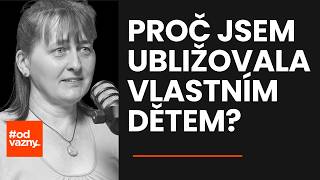
Jitka Kamencová
I hurt my own children
She raises the hardest subject of all to talk about: not as a victim, but as a parent who looks back and sees her own failings. She speaks about parenting without awareness, guilt, apologising, and how it is possible to start repairing the relationship with your own child.

Gabča
Anorexia nearly took my life
For years, the illness repeated one sentence in her head: you’re not thin enough to deserve help. She went through orthorexia, anorexia nervosa, bulimia and a suicide attempt. Today she works as a peer support worker, helping others find their way out.
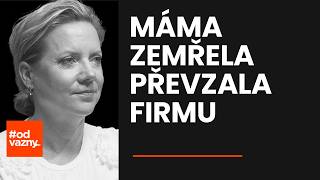
Jana Rule
My mum died in my arms
She was fifteen when she found herself alone on the other side of the world. After her mother’s death she took over the family agency CCI, and today she helps students find the courage she once had to find herself.

Marie
Escaping the hell of domestic violence
She thought it was love, and it turned into a fight for her life. To protect her, her voice is altered and her image blurred in the episode, and the name is a pseudonym. She talks about psychological and economic terror, and about how escaping an abuser can be planned and survived.

Jana Marková Žamberská
He came at us with an axe
She grew up in fear of her mother’s two violent partners. Running out into the freezing cold to escape an axe, abuse, and boarding school as the only way out. Today she is fighting for the future of her son, who was left paralysed by a heart attack at thirty-five.

Nella
My grandad abused me from the age of 7
At sixteen she recorded the abuse and spoke up. The interview covers the whole journey: first confiding in a friend, the police and the investigation, the abuser’s confession, his death before the trial, therapy, self-harm, and what finally helped.

My uncle said: this will be our secret
Guest who chose not to be named
A powerful testimony about abuse, trauma and silence, and about the path to regaining a sense of safety. The guest appears without giving their name.

Marie Klusáčková
ADHD in adults
You’re not lazy, it might be ADHD. A conversation about mental health, inner pressure, and why sometimes a person needs understanding, not judgement.

Patrik Byrouti
I wished my dad were dead
A childhood in poverty, addiction, shame and the way back to life. About a family that wounds, and about what can keep a person from breaking.

I gambled away 180,000 crowns
Guest who chose not to be named
Betting cost him his sport and his peace of mind. A conversation about addiction, family, shame and the moment it finally sank in.
I’m 31 and I’ve never been in a relationship
Guest who chose not to be named
A candid confession about loneliness, shame and the question “what’s wrong with me?”, which more people ask themselves than you might think.

Mgr. Eva dos Reis
Racism is taking away my daughters’ sense of safety
She adopted two daughters and now watches the prejudice around them take away their sense of safety. A conversation about parenting, acceptance and what racism does to a child’s soul.

Radmila Pinkavová Jirkovská
I was abducted at 21
Since that night, as she puts it, she has been living on borrowed time. A conversation about abduction, about a fear that cannot be set aside, and about how to go on living.

We were 12. Three boys raped me on a psychiatric ward
Guest who chose not to be named
A testimony about what happens when even the place that is meant to protect you fails. The guest appears without giving their name.

Elen Balvín Jirková
I forgave my father only at his deathbed
On forgiveness that came late, but came nonetheless. A conversation about a relationship that hurt all her life, and about the decision to bring it to a close.

I’ve been caring for my sick parents since childhood
Guest who chose not to be named
A childhood spent in the role of carer, and the panic that only came once it was all over.
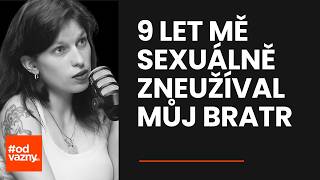
My brother abused me for nine years
Guest who chose not to be named
Nine years of abuse by their own brother and twenty-five years of silence. On why families are where people stay silent the most.
Why mums shout
Guest who chose not to be named
We see our children, but we don’t feel them. A conversation about exhaustion, the limits of a parent’s patience and what can be done about it.

I was almost raped at university. Today I teach survival
Guest who chose not to be named
On what happened on campus, and the path that led from there to working with others.

Alopecia took my hair, not my life
Guest who chose not to be named
She had to shave her head. On what hair loss does to your identity, and how you can learn to look in the mirror again.

No one believed I was ill
Guest who chose not to be named
On a years-long search for a diagnosis, on doubts from doctors and those around her, and on how exhausting it is to have to defend your own illness.

The Dietrich family
We have 17 children
Chaos, faith and love in one family. A conversation about what an ordinary day looks like in a household with seventeen children, and what holds such a family together.

He abused us in the church
Guest who chose not to be named
“The other boys like it,” he used to say. A testimony about abuse in a church setting, about one victim after another, and about how many of them were left without a voice.

Ondřej Krejča
Blind from birth
On life without sight, on the sense of humour he has never let anyone take from him, and on everything you hear when you have to rely on your ears.
Michaela Burianová
Dad beat Mum, Mum’s partner abused me
And her mother didn’t believe her. A conversation about a childhood caught between two forms of violence, and what it does to a child who has nowhere to turn.

Karolína Hospodková
Alopecia came when I was 14
It was a shock. Today she goes without a wig. On how long it takes to accept your own reflection and what you need to get there.

The bullying and anorexia began with a teacher’s remark
Guest who chose not to be named
“How can someone so ugly go to school?” A sentence from an adult that set off years of bullying and an eating disorder.

The weight of motherhood: why no one talks about it
Guest who chose not to be named
On the other side of motherhood that nobody photographs: exhaustion, guilt and silent overload.

Lukáš Jindra
I’ll never be the same again. And they were right
Doctors told him he would never return to how he was before. They were right: in his own words, he is better. A conversation about what can be gained from the very worst.

Sandra Luciani
I lost my womb
For years she was told she just had “trapped wind”. On the dismissal of women’s health problems in doctors’ surgeries, on losing her womb and the depression that followed.

Kateřina Maria Kraft
My teachers bullied me
Bullying by the very people who were supposed to protect her drove her to the point where she wanted to end her life. A conversation about what an adult who abuses their position can do.

Michaela Sabina Bížová
Dealing with anorexia, depression, OCD and PTSD since 14
On living with several diagnoses at once, on what an ordinary day looks like when your mind never stops, and what helps her get through it.
Lenka Heráková
Hodgkin lymphoma at 20
She couldn’t believe it was cancer. A conversation about a diagnosis that comes just as life is beginning, and about finding the way back.

Juraj Sutoris
I was homeless and an addict
From the streets and addiction to running his own business. A conversation about hitting rock bottom, the decision that turned everything around, and what such a comeback involves.

Jiří Kylar
I was 12 when a priest began abusing me
He breaks the church taboo. A conversation about abuse in the church, about how the institution responds, and about the long road to speaking out.
Lucie Suková
Cervical cancer
Doctors didn’t believe her. On how long it took for someone to take her seriously, and what that meant for her treatment.

Vojta Chaura
I killed a man in a car crash
On the split second that divides a life into before and after, on guilt that cannot be undone, and on how it is possible to go on living with it.
Markéta Gajdíková
I was told I had breast cancer over the phone
On a diagnosis delivered by phone, on treatment, and on what a person most needs to hear at a moment like that.
My stepfather abused me for 8 years
Guest who chose not to be named
She was ten when it started. She called him Dad, even in bed. One of the most-watched testimonies on the show.

Klára Svobodová
My first baby died, my second is deaf
On two blows, one after the other, and on the question of how to survive when life stops making sense.

Don’t wait for your body to stop you
Guest who chose not to be named
On the warning signs the body sends before it shuts down completely, and why most of us ignore them.

Štěpánka Živčáková
I wanted to kill myself
A powerful confession about the day she decided to end her life, and what stopped her.

A priest abused me for years
Guest who chose not to be named
The church stayed silent, and according to him there were at least ten victims. A testimony about abuse and the institution that covered it up.

Lukáš R.
5 years of hard heroin addiction
On five years he can’t fully remember, and on how he learned to live again.

He abused me and threatened to kill me
Guest who chose not to be named
Dad beat them mercilessly, and Mum didn’t care. A testimony about a childhood without a single safe adult.

David Vaníček
From the ghetto to a family and success of my own
On a start in life nobody would want, on the moment something shifted, and on the family he built himself.
Wim Hof saved my life
Guest who chose not to be named
Because of severe addictions he lost his house and himself. On hitting rock bottom and the method that gave him his first firm footing.
I was 5, he was 18
Guest who chose not to be named
Abuse she dealt with for forty years. On how long it can take before a person even finds the words.

I was 14, he was 60
Guest who chose not to be named
He raped her in a sauna and nobody believed her. A testimony about what it does to a child when no one believes them.

Marie Tilšarová
He abused me when I was 8
For years afterwards she drowned her depression in alcohol. On a double trauma: the original one, and the one a person inflicts on themselves while trying not to feel.

My grandad abused me from the age of 3
Guest who chose not to be named
Her parents knew and kept sending her there. One of the hardest testimonies ever heard on the show.
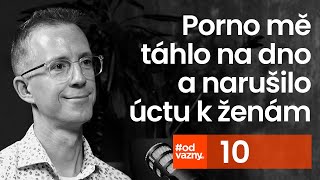
Petr Štěpánek
Porn dragged me down
On an addiction nobody talks about, and how it eroded his respect for women and his own relationships.

Adam Hnida
A parish priest raped me
The parish refused to hear him and silenced him. The very first episode of #odvážný and one of the most watched.
Expert interviews 23

Čestmír Horký
Founder of the Znesnáze21 donation platform
He can launch a fundraiser for someone in need within twenty minutes. He also describes the envy that families of seriously ill children often face.

Marta Makaki
Psychotherapist, founder of the Institute for Body and Mind
Doctors talked about operations and fatal consequences. Marta decided to go her own way and today helps others.
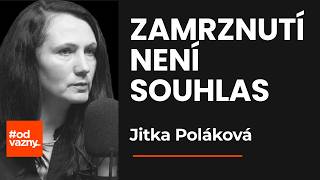
Jitka Poláková
Director of proFem
She has led proFem for thirteen years and was behind the founding of PORT, the first comprehensive centre for victims of sexual violence in the Czech Republic. She explains why the first step is not the police but safety, and why freezing is neither consent nor weakness.

Lukáš Rychetský
Founder of the prevention organisation Lajfr z.s.
He teaches modern, respectful sex education in Czech schools. He talks about what happens when an intimate photo leaks into a class group chat, and how to talk to children about sex so that it becomes not a taboo but a safe compass.
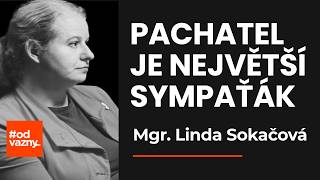
Mgr. Linda Sokačová
Centrum LOCIKA
An expert on violence against children explains why you can’t recognise an abuser by their face, and why it is often “the nicest guy around”. She talks about manipulation, why children blame themselves, and how investigations can now be conducted more safely than in the past.

Adéla Hendrychová
Director of the organisation Dítě v srdci (Child in the Heart)
She has twice lost a baby and today supports families through the hardest thing of all, something that is hardly ever talked about. She shares the story of little Jasmínka and what helps a woman, her partner, siblings and grandparents after a perinatal loss. And above all: what never to say.

Mgr. Petr Ptáček
Psychologist and psychotherapist
He sets out the impact of sexual abuse, describes the rise in anxiety and depression since the pandemic and explains why it is so hard to find help. He also talks about what happens when the justice system puts offenders before victims.

ACORUS
Leaving is only the beginning
The opening episode of the #odvážný × ACORUS series on crisis support, shelter accommodation, counselling and therapy. Why it is so hard for victims of domestic violence to leave, why ultimatums often don’t help, and how violence affects children.

Ágnes Bučinská Němečková
A child in hospital must not be alone
On why a parent is part of the treatment, not a visitor. A practical and human look at what children in hospital miss most.

Zdeněk Jan Weber
Coaches abuse athletes through their power
On the abuse of power in sport, on where the line lies between tough training and manipulation, and on the consequences athletes carry into adulthood.

Monika Růt
When the system fails in cases of domestic violence
On how to overcome domestic violence, and on the places where help ends before it has even begun.

PhDr. Pavlína Doležalová
Adult children of alcoholics
On growing up in an alcoholic family, the roles a child takes on, and how they still show decades later.

Rita Kramerová
Psychotherapist
She explains why victims stay silent and why abusers often feel innocent. An expert view of the mechanisms that keep abuse hidden in silence.

Jana, residential care worker
90% of abused children are abused within the family
On why children confide in their residential care workers in particular, what they hear, and how little the system is able to do with it.

Klára Šimáčková Laurenčíková
What children go through that we are afraid to talk about
A conversation about the threats to children that are hardest to discuss in public, and about what should change at a system level.

Mgr. Bohuslav Jakubec
Autism is not a label
An expert on autism spectrum disorder on what really helps autistic children, and what nobody tells parents in time.

Bullying from three perspectives
Therapist, coach and survivor
“Kids don’t cut themselves just for fun.” A discussion between three people who know bullying from different sides and agree on where adults fail.

Terra Kasal
Psychologist
Trauma isn’t only about abuse. She reveals what really shapes a child’s psyche, and why the consequences often only surface in adulthood.

Mgr. Barbora Čeledová
When a child begs for help
On parents who don’t believe in psychology, and on the children who wait in the meantime for someone to notice them.

25 years in a helping profession
Guest who chose not to be named
On a rewarding but demanding vocation, and on what it does to someone who has been helping others for a quarter of a century.

Jiří Kubík
Journalist
On the case of a teacher who abused a pupil and is teaching again. In his words, the biggest shock he has come across in his work.

Martin Kožíšek
39 children abused in a single Scout troop
On a case that shook the Scout movement, and on how long a closed community can keep silent.

Kateřina Horká
Women make 85% of decisions, yet still face inequality
On the contradiction between how much women actually decide and how they are treated.
Familiar faces 25

Barbora Hlaváčková
TV presenter
She talks about choosing not to have children, the eating disorder she had as a teenager and sexual harassment. And about where tabloid journalism ends and an empathetic interview begins.

Lucy Slouková
A promise I kept
Czech national champion in Latin American dance and show dance. At seventeen she lost her dance partner, Ondra, and promised him she would dance for both of them. A conversation about loss, the darker side of a beautiful sport and a new beginning.

Jan Látal
Documentary maker, czeXperiment project
Creator of a documentary platform that explores Czech society through social experiments. He talks about what happens when the Czech Republic takes an unfiltered look at itself: prisons, the bystander effect, online hate, and the courage to leap into the unknown.
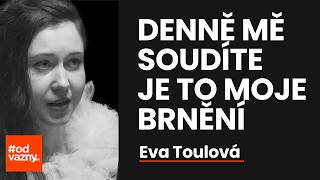
Eva Toulová
Hate, tabloids and anonymous trolls
On why we judge women by their clothes, what it is like to become the target of anonymous hatred, and what breaks inside a person when they are written about without their consent.

Jay Fox & Holly
A parent should be a bodyguard
A conversation about children, school and boundaries that adults must not ignore. On why bullying between children must never be played down, and where a parent’s responsibility begins.

Ridina Ahmedová
All my life I fought against my body
A singer and voice teacher on her long struggle with her own body, and on what happens when you stop fighting it and start listening to it.

Pavel Moric
You have everything, yet inside you quietly suffer
On the inner emptiness that hides behind success, and why it is so hard to talk about.

Vojtěch Dyk
I lost my voice, my father and my certainty
A singer and actor on a period when he lost what had defined him. On losing his voice, his father’s death and the question of whether people would still take him seriously.

Daniela Špinar
Director and theatre maker
A frank conversation about identity, about bureaucratic regulations that decide people’s lives, and about the right to be yourself, unconditionally.

Petr Bollardt
Why I stood up for LGBT+ people
On why someone stands up for a group they don’t belong to, and what it cost him.

Kateřina Falbrová
On the film Sbormistr (The Choirmaster)
“Evil happens in silence.” On abuse she knew nothing about, and on how long the people around an abuser can stay silent.
Andrea Kalivodová
Hit by a motorbike, then they found a tumour
An opera singer on two blows that came one after the other, and what kept her going when she couldn’t plan more than a day ahead.

Petra Hapková
Depression kept me from getting out of bed
On depression that brings absolutely everything to a halt, and the steps that led out of it.

Markéta Hamalčíková
Cancer at 24
An actress and #odvážný presenter on the shock of the diagnosis, on fear, and on a will to live that suddenly became very concrete.

Nikola Ciprová
He raped me and wanted to kill my family
A singer, actress and #odvážný presenter on her own story: a relationship that turned life-threatening, and how she got out of it.

Heidi Janků
Mum died when I was 11, Dad drank
A singer on a childhood that ended sooner than it should have, and on how she drew strength from it instead of bitterness.

Václav Tobrman
Dad beat me, music saved me
A musician and #odvážný presenter on the domestic violence he grew up with, and on the music that set him on a different path.
Lukáš Langmajer
ADHD is more than restlessness
An actor on what it means to spend years not knowing why things don’t work, and the consequences of ignoring the symptoms.

Denisa Pfauserová
Psychological bullying hurts more than physical
An actress on bullying that leaves no bruises, and on the self-confidence she had to fight to win back.

Eva Leinweberová
Between the theatre and caring for my dying mum
An actress on what life is like when it is split between the stage and a hospital room.
Nikola Ciprová
I swallowed 136 pills
A candid confession about self-harm, a suicide attempt and what kept her afloat.

Dan Horyna
How I dug myself out of addiction
On how easy it is to fall into addiction, how hard it is to climb out, and what specifically helped him.

Štěpán Budil
We moved into the boot of a car
What life is like with no possessions at all. On minimalism that isn’t a pose but a decision.
Jessica Bechyňová
The hardest thing was playing an abused girl
An actress on a role that got under her skin more than she expected, and on the burnout that followed.

Vlastina Svátková
Anorexia, bulimia, domestic violence and stalking
An actress on everything she has been through, and on how “surviving” is not the same as “it’s behind me”.
From the archive 9

Why children and adults hurt themselves
Guest who chose not to be named
From the archive of our first interviews in 2022: on self-harm, and on why victims of abuse think about suicide.

How the Czech Police respond
Guest who chose not to be named
From the 2022 archive: how the Czech Police and the Police Presidium respond to abuse and violence against children.

A convicted teacher is teaching again. What does OSPOD say?
Guest who chose not to be named
From the 2022 archive: how it is possible that someone convicted of child sexual abuse is teaching again, and what the child protection authority (OSPOD) has to say about it.
Eva Decroix
Do we need a sex offender register?
From the 2022 archive: a conversation about whether and how a sex offender register should be created, and what the state is doing about it.
Renata Ježková
Therapist
From the 2022 archive: how to talk with victims and survivors of sexual abuse. Renata Ježková’s expert contributions also accompany the book Klubovna Naděje (in Czech).
Daniel Bartoň
Lawyer
From the 2022 archive: what rights victims of sexual abuse have, and how they can actually enforce them.

Simona Babčáková
How trauma can serve us
From the 2022 archive: an actress on trauma as something that can not only be survived but also transformed.

Hana Lehečková
It’s mainly about grooming children’s minds
From the 2022 archive: on how abuse doesn’t begin with a touch but with manipulation, and why this is exactly what makes prevention so hard.
Therapy with an African woman
Guest who chose not to be named
From the 2022 archive: how therapy helped in coming to terms with sexual abuse.
Testimony alone protects no one
If talking about abuse were enough, we would be further along than we are. The interview archive is therefore only one part of what we do, and on its own it isn’t enough. It serves three purposes.
First: it breaks the idea that this happens somewhere else. Most people picture abuse as a stranger in a dark underpass. What you hear in the interviews is different: an uncle, a grandfather, a coach, a sibling, a priest, a stepfather. In other words, someone the family trusted. Until parents hear this, they look for risk where it is least often found.
Second: it gives words to people who didn’t have them. If you have no name for what happened to you, it is hard to say it out loud. Someone else’s story often provides those words. That is exactly why links to helplines appear at both the beginning and the end of this overview.
Third: it is material for our school talks. From what guests describe again and again, we build the content of our talks for schools and of the programme we are preparing, Nikomu to neříkej (“Don’t Tell Anyone”). It isn’t textbook theory, but patterns that recur across dozens of personal testimonies.
How we choose topics
The archive isn’t only about sexual violence, even though that is where the whole project began. Over time, other topics have been added that share a common denominator: people are ashamed of them, and so they stay silent. Domestic violence, addiction, eating disorders, bullying, the loss of a child, mental illness. In every case, silence is the part that makes the problem last longer.
We don’t aim for completeness, or for balance in the journalistic sense. We film with those who are ready to speak, at a pace they can cope with. That is why we don’t have a regular broadcast schedule, and there are sometimes longer gaps between episodes.
What happens to guests afterwards
For us, it doesn’t end with publication. In the first days after an episode is released, we stay in touch with the guest, because that is when most of the reactions come in, including unpleasant ones. We moderate the comments on episodes and remove any that call a guest’s testimony into question.
Every episode takes time, travel and expert oversight
We pay for filming, editing and consultations with psychologists from donations. Without them, this archive would not exist.